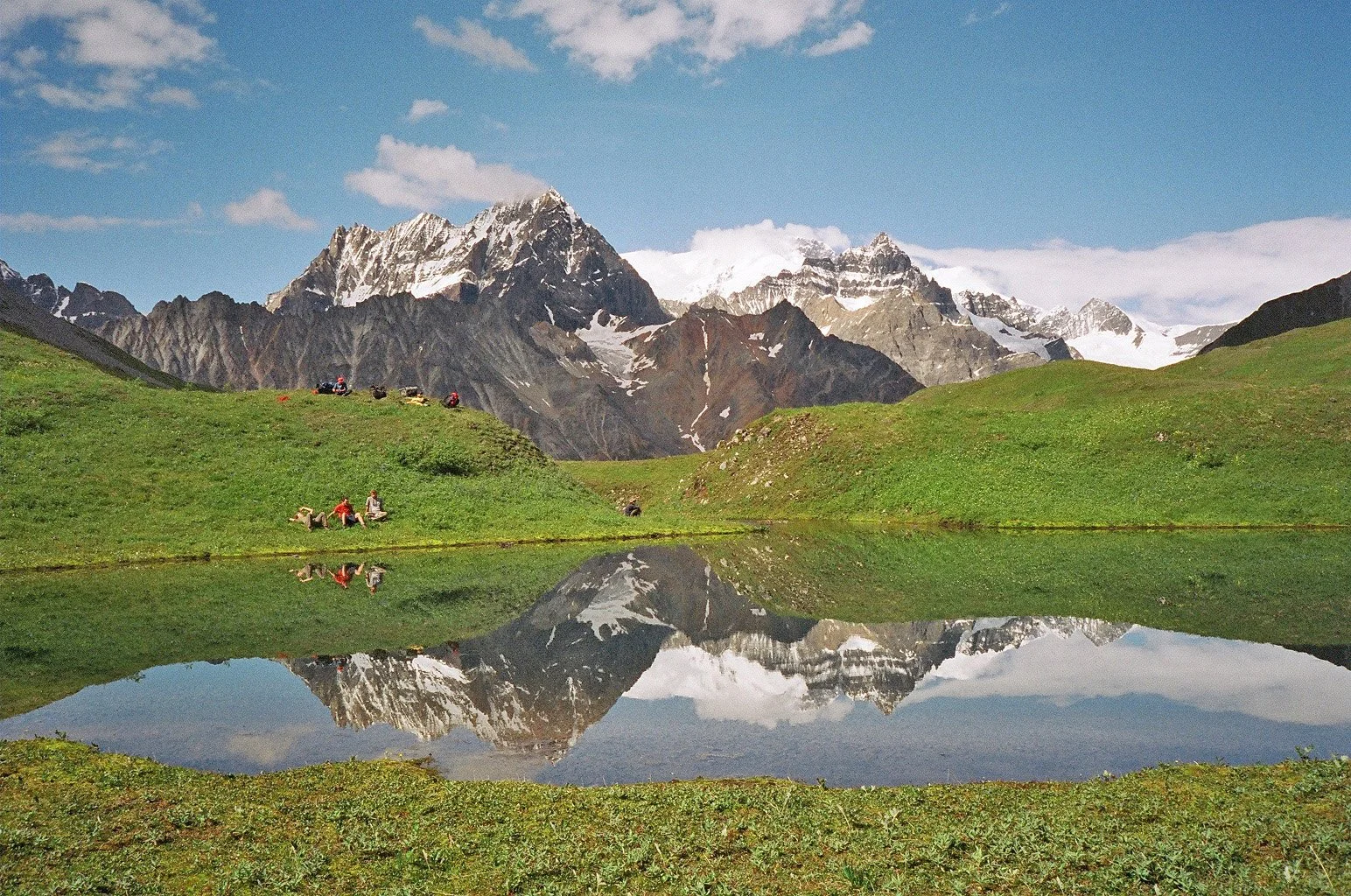
Experience the dynamic landscapes of the Wrangell Mountains


We welcome students from around the world to participate in our summer field research program and collaborative learning community, preparing for careers in the sciences, humanities, and public policy.
Wrangell Mountains Field Studies is a collaboration between the Wrangell Mountains Center and the University of Maine School of Earth and Climate Sciences and Climate Change Institute.

7 weeks | June 22 – August 10, 2026
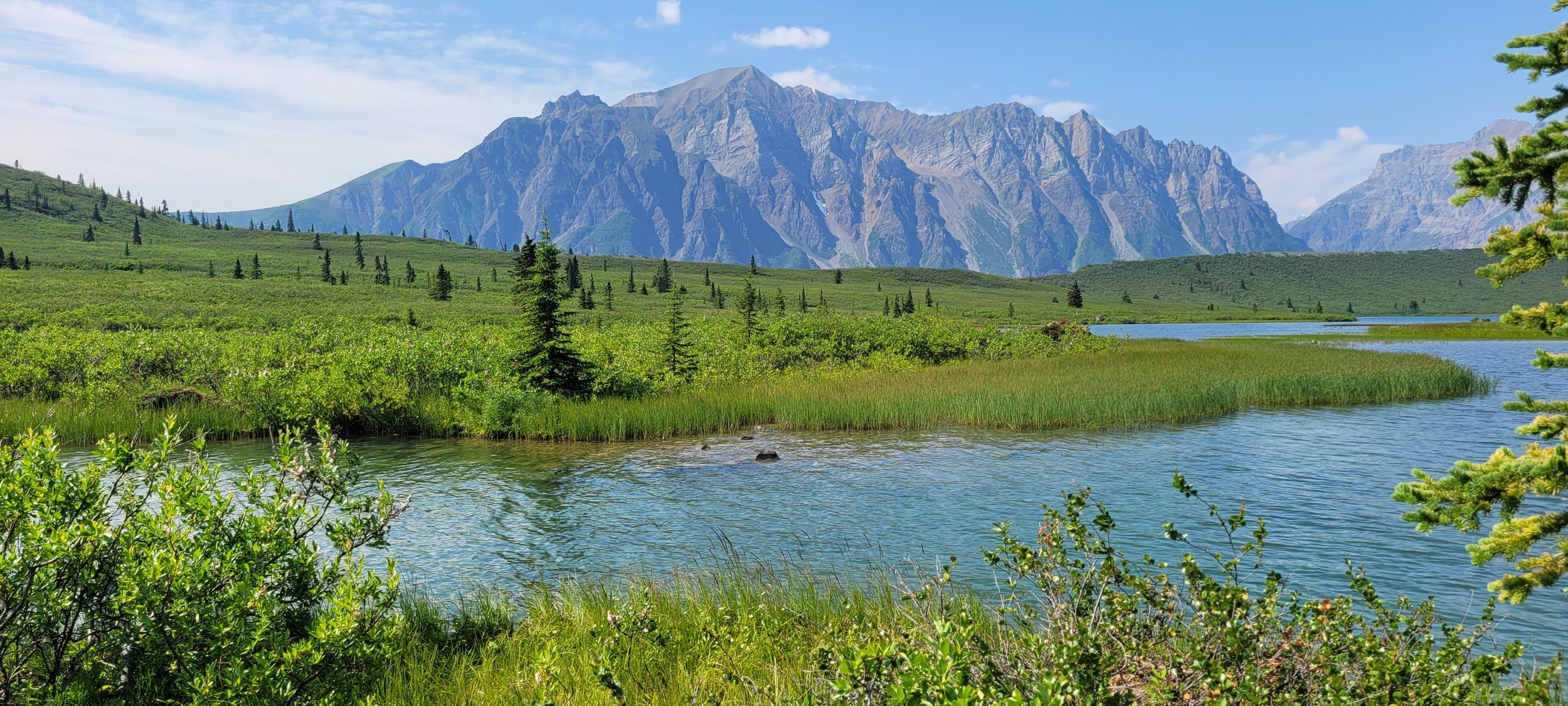
Field Studies | We are an interdisciplinary field program taking place among the glaciated subarctic mountains, valleys, alpine tundra, and boreal forest of the Wrangell Mountains.


6 semester credits | Awarded to students by the University of Maine School of Earth & Climate Sciences.
McCarthy, Alaska | We are based in McCarthy, a community within Wrangell-St. Elias National Park & Preserve.
The Wrangell Mountains of Alaska reveal Earth’s systems in motion: glaciers advancing and retreating, rivers carrying immense sediment loads, ecosystems adapting to instability, and human communities shaping and shaped by this terrain. Wrangell Mountains Field Studies brings undergraduate and graduate students into this living landscape for seven weeks each summer. Students earn 6 upper-division semester credits from the University of Maine School of Earth and Climate Sciences, while learning to observe and study processes across scales—from tectonic uplift and glacial melt to ecological change and human land use practices. Based in McCarthy and the surrounding Wrangell-St. Elias National Park & Preserve, the program blends structured classes, backcountry expeditions, and original research projects, building both scientific skills and the collaborative practices needed for remote fieldwork.
Curriculum
The Field Studies Curriculum explores subarctic ecological and geophysical processes, glaciology, land use practices, and system modeling. Local narratives and stories are an important part of the course, along with selected academic readings. Climate change impacts to our region, as well as climate adaptation and land stewardship planning, are unifying themes.
Students plan and execute original small-group field research projects of their own design, in consultation with faculty - many of whom have ongoing local research projects. Student projects include fieldwork and data collection, writing, and illustration. Final projects are compiled for public presentation at the Field Studies Symposium.
Learn more about the Field Studies curriculum here.

McCarthy
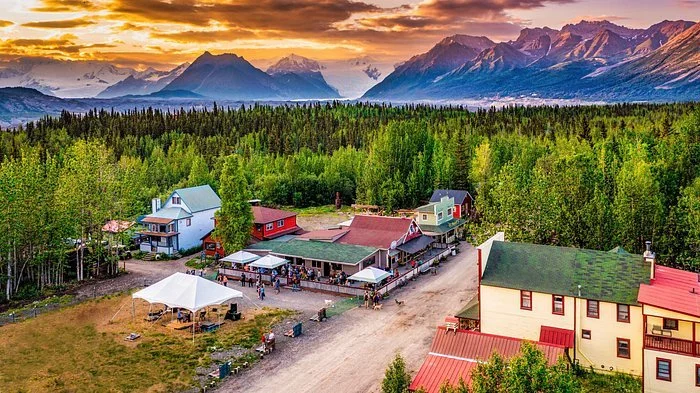
In the remote town of McCarthy, students learn alongside core and guest instructors from across the region, and take part in community events and workshops. Daily life in town revolves around the Wrangell Mountains Center (WMC) campus headquartered at the historic “Old Hardware Store.” Students and instructors work alongside local residents and experience off-grid life in a rural Alaskan community. Classes and discussions take place on the WMC campus, or at nearby boreal forests, glacial moraines, and riverbeds. Workshops, lectures, and artist residencies hosted by the Wrangell Mountains Center create diverse learning opportunities for students and community members.
Learn more about life in McCarthy here.
The Backcountry
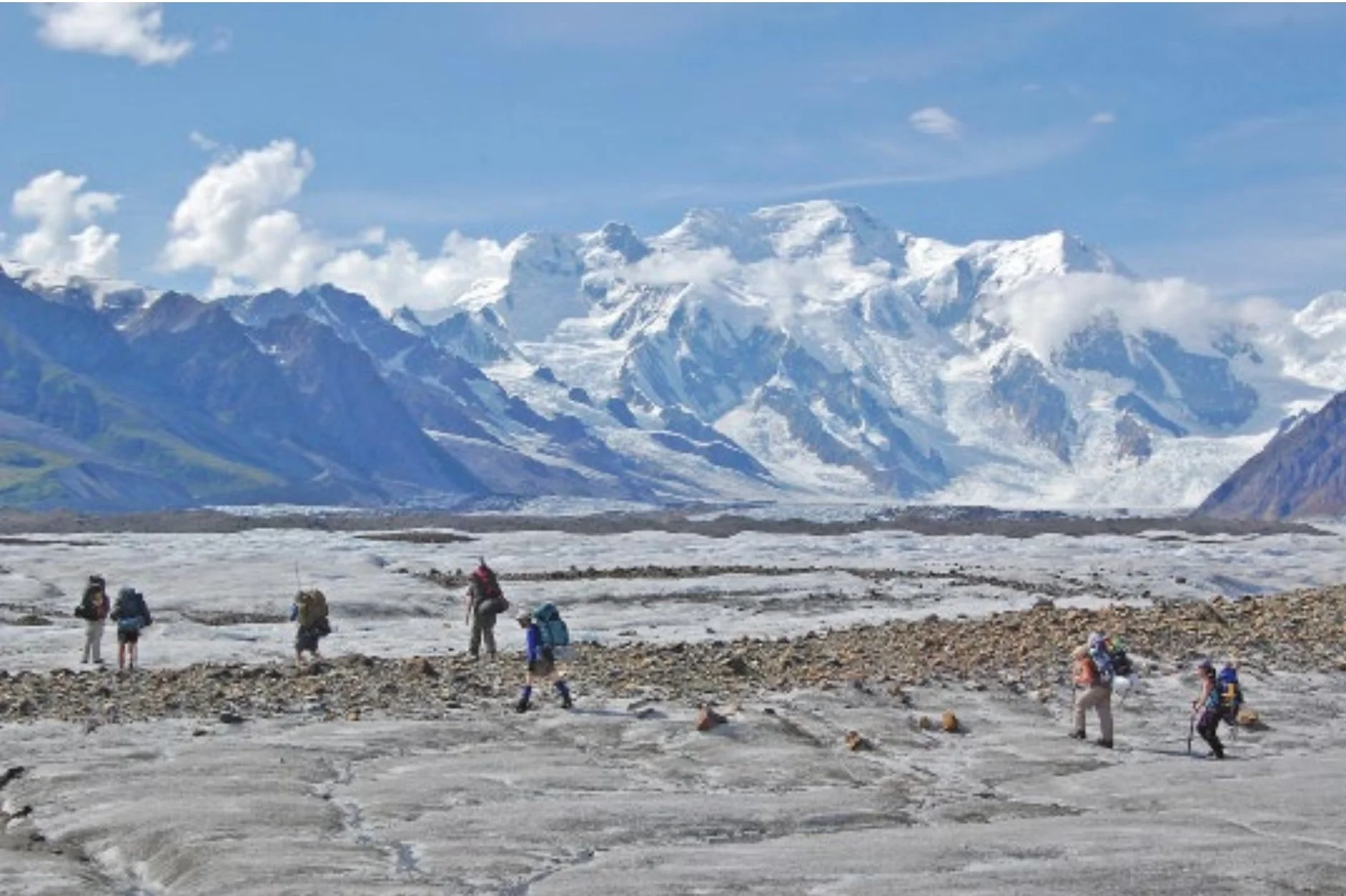
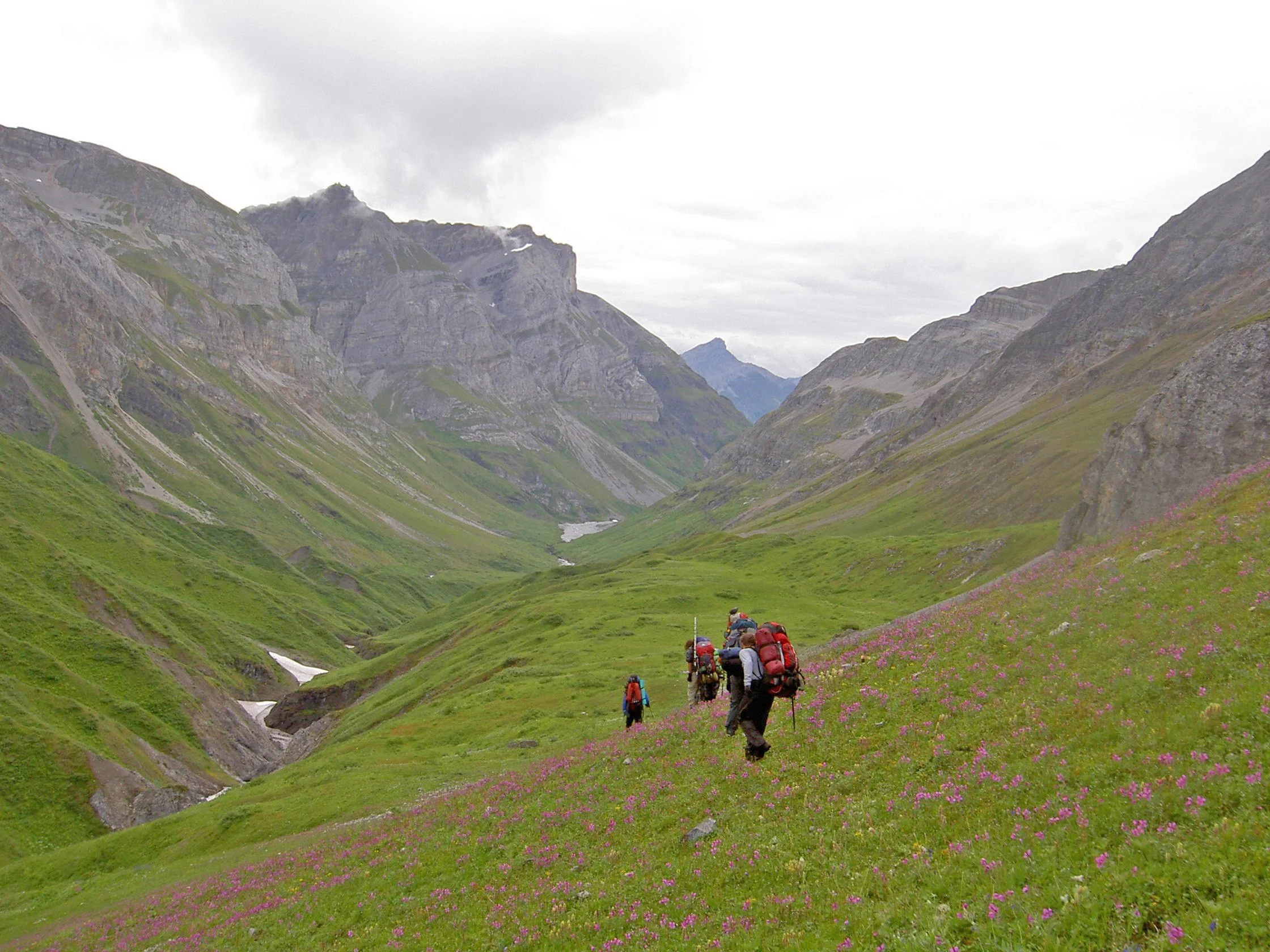
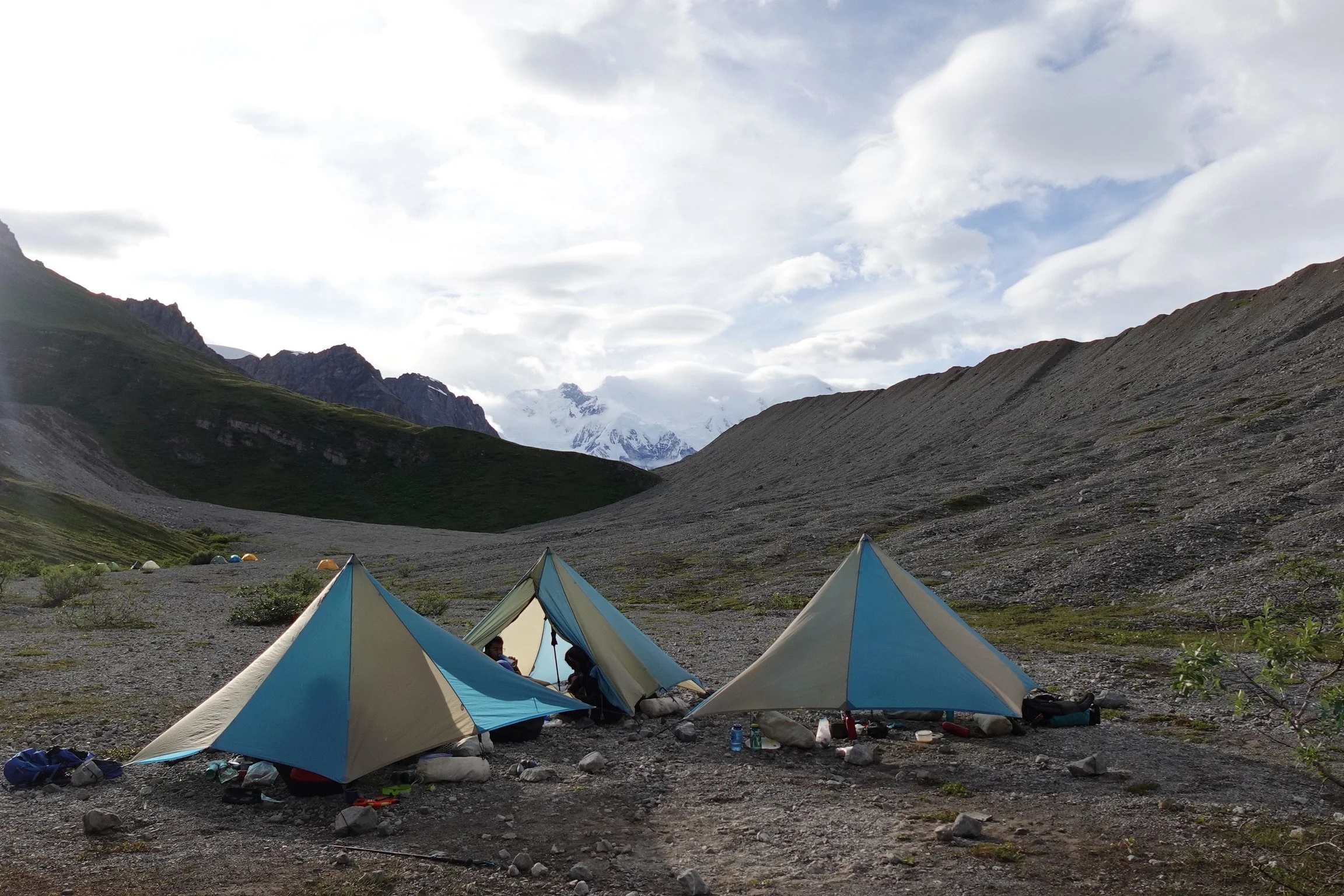
From McCarthy, we trek up the Kennicott Glacier and into the surrounding mountainous terrain of Wrangell-St. Elias National Park & Preserve. Four of the program’s seven weeks take place here. In the backcountry we use natural history field journaling and sketching techniques to notice landscape processes from momentary to geologic timescales. Field research techniques in geosciences and environmental sciences are taught in situ, at sites selected for student projects. The glacial valleys here reveal 230 million years of transformation, from volcanic island arcs and migrating plates to Pleistocene glaciations and Little Ice Age moraines. Along glacier margins we witness deglaciation, ecological succession, and unstable slopes reshaped by uplift and erosion. Rock glaciers, tundra, permafrost, boreal forest, and human communities all form part of an interwoven system. Articulating the links between these systems across temporal and spatial scales is the guiding framework of the course.
Learn more about life in the backcountry here.


Info for Students
Who can join: Open to undergraduates, graduate students, and non-degree participants 18 or older.
Academic credit: Grants 6 upper-division semester credits through the University of Maine School of Earth and Climate Sciences. The course often meets capstone or field research requirements in Earth/Climate Sciences, Environmental Sciences, and Geology.
Backcountry expeditions: Four of seven weeks are spent in the backcountry of Wrangell-St. Elias National Park & Preserve, divided into one-week and three-week trips. While physically demanding (we travel solely by foot across varied terrain), no prior backpacking experience is required. Wilderness First Responder certified faculty teach fundamental skills.
Preparation & gear: Students will need to bring clothing and equipment suited to local conditions and fieldwork. We are available for guidance on pre-program training and preparation.
Costs & Scholarships: Most students pay for Field Studies tuition & fees through a mix of external grants and scholarships, as well as personal funding. Internal field fee scholarships are available through Wrangell Mountains Center.
Learn more at Info for Students here.
About Us
Field Studies is hosted by the Wrangell Mountains Center (WMC) in the tiny town of McCarthy, Alaska, as a collaborative learning community and field research program comprised of our students, Faculty, staff, and community partners in the Copper River Basin.
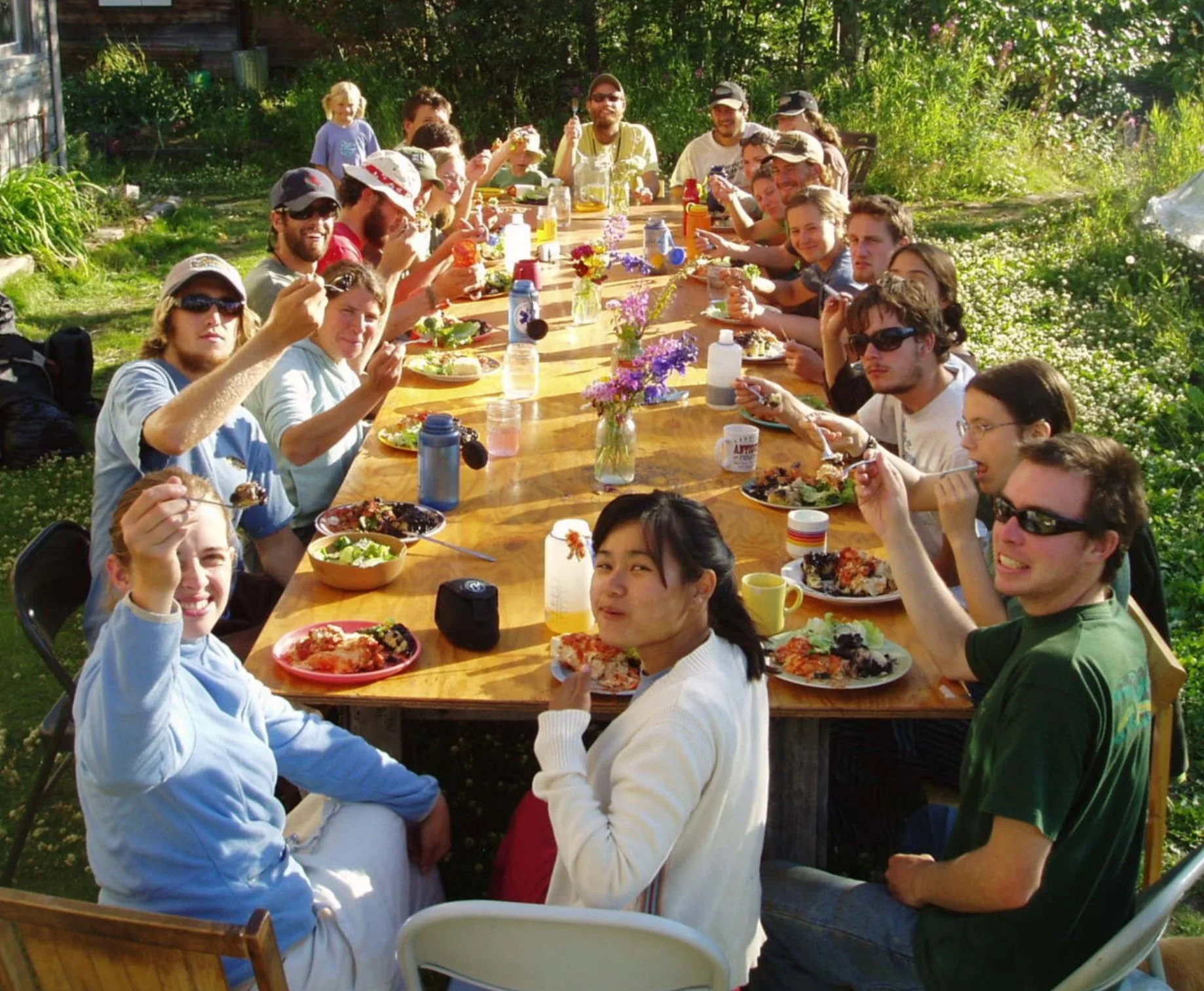
The Wrangell Mountains Center is a non-profit research, humanities and education institute located in McCarthy in Wrangell-St. Elias National Park & Preserve. The Center hosts programs promoting understanding, appreciation, and stewardship of the land and its communities.
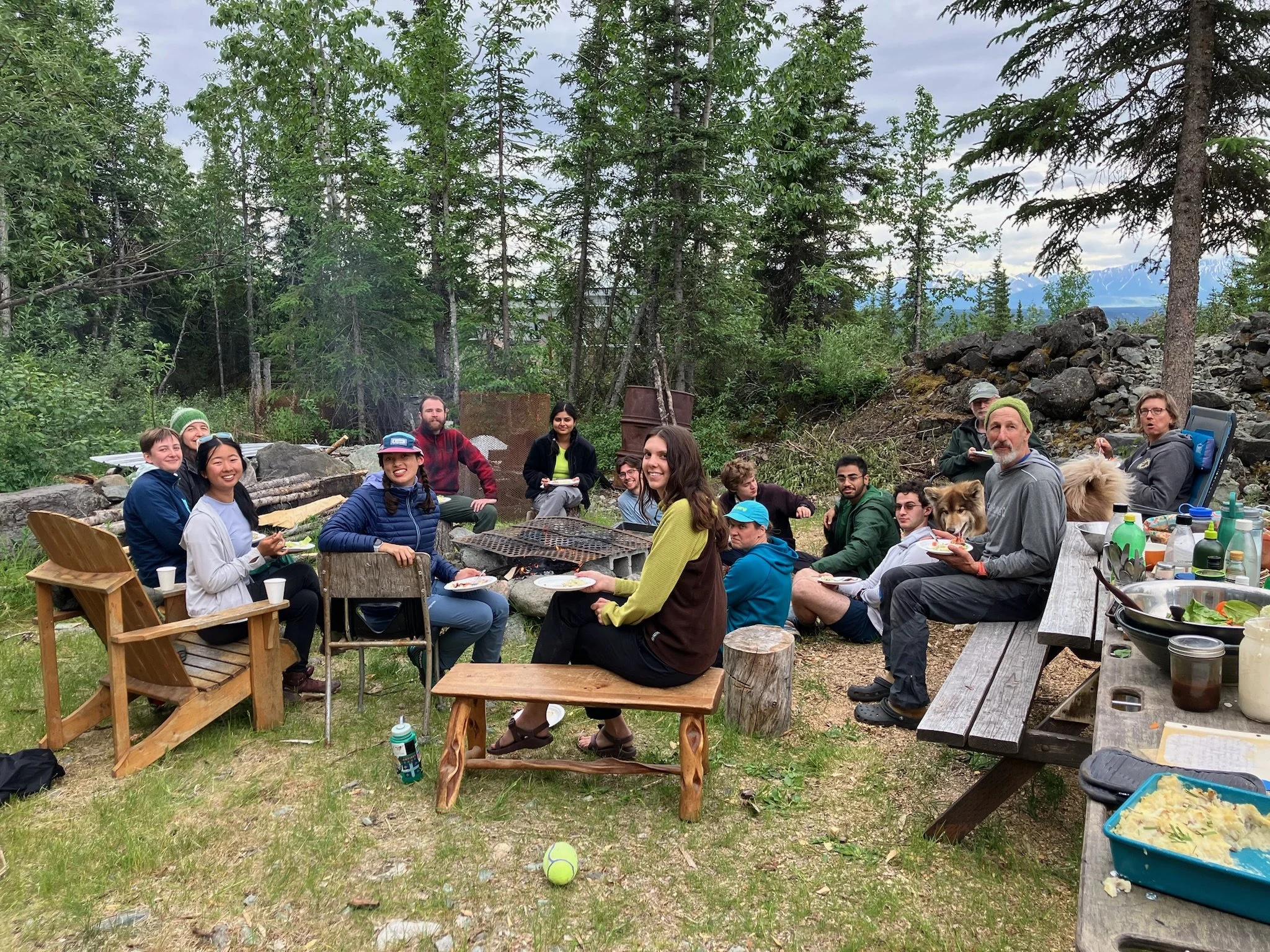
Field Studies is part of a legacy dating back to 1971, when co-founders of the Wrangell Mountains Center brought the first of many groups of students to the interior Wrangell Mountains for interdisciplinary field-based research. Our program has been a core part of the Wrangell Mountains Center ever since.
Since our founding, Field Studies instructors have included researchers, artists, and naturalists, many of whom live in the McCarthy area.
Learn more about us here.
Learn more about our faculty here.

“Attending Wrangell Mountains Field Studies was truly a life changing experience for me, in more ways than one. It will challenge your perspective of the meaning of place, science, education, and comfort. If you want to spend seven weeks learning alongside peers from around the world, backpacking, exploring, and laughing, Field Studies is the place for you!”
Ready to Explore the Wrangells?
Please submit this form with inquiries about Field Studies, or email fieldstudies@wrangells.org