
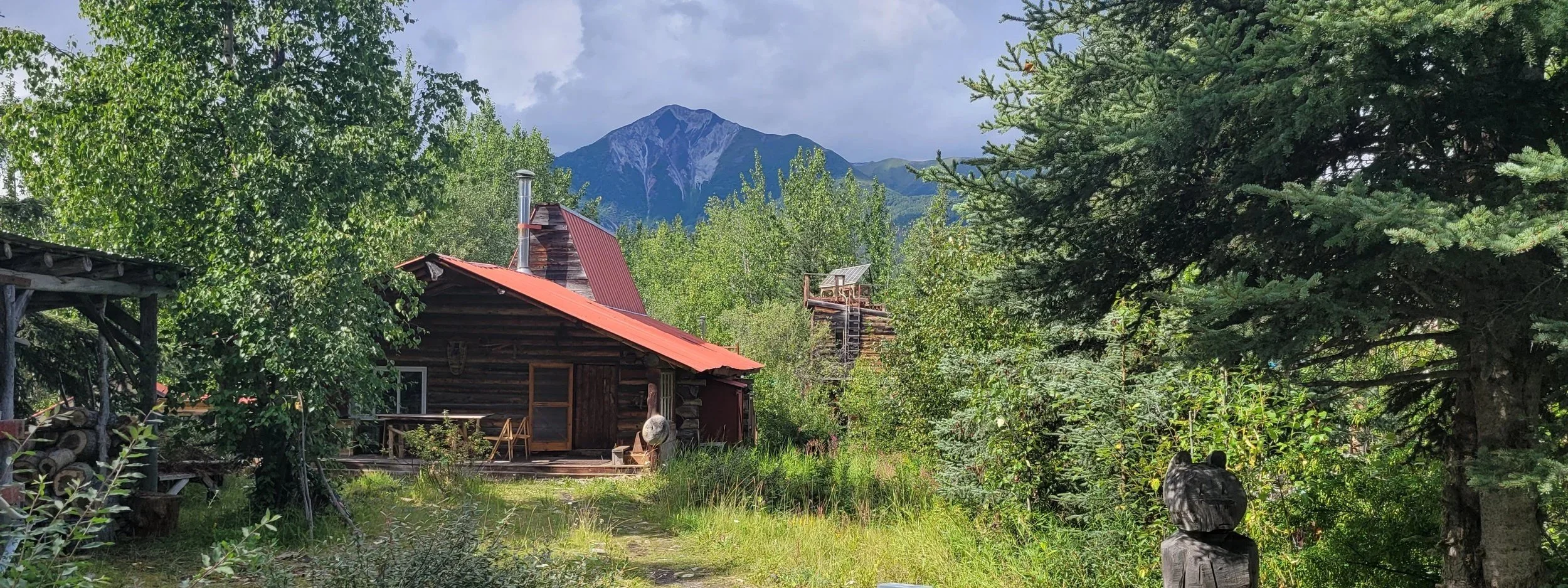
WHO WE ARE
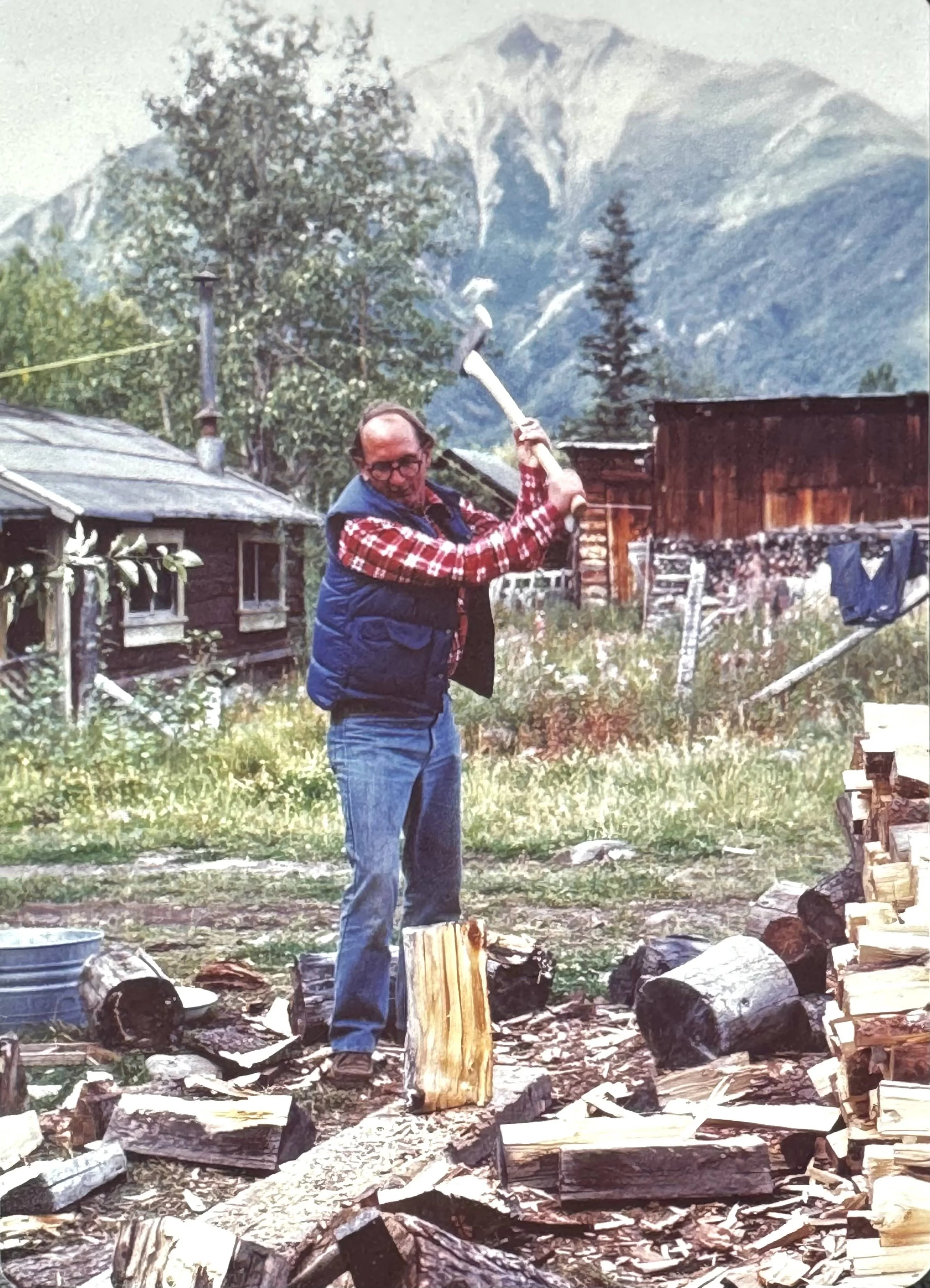
Dr. Richard Cooley splitting firewood in front of the Old Hardware Store in McCarthy, late 1970s
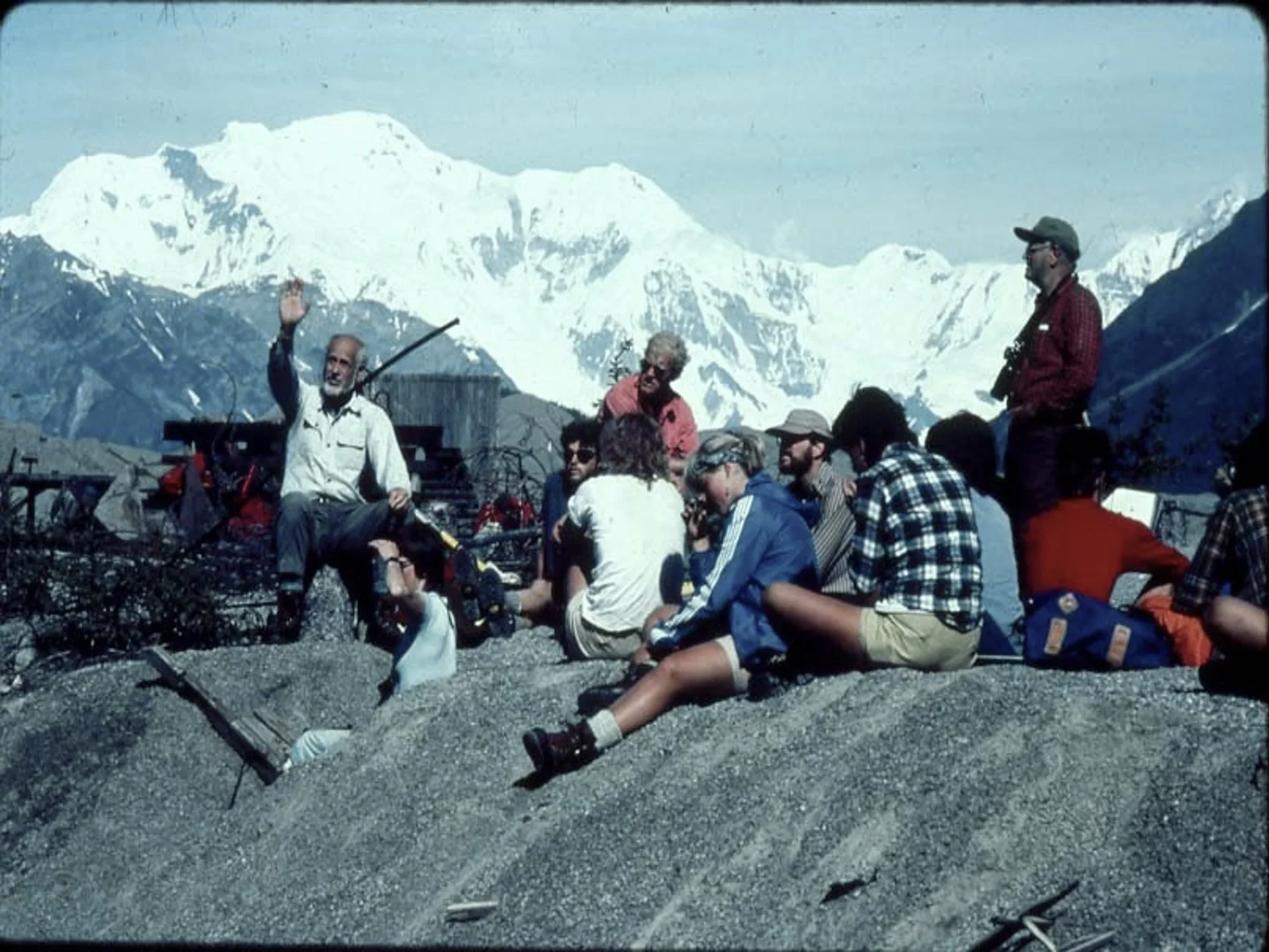
Field Studies students on the Kennicott Glacier, with Drs. Ken Norris and Ed LaChapelle, and Program Coordinator Ben Shaine (1984)
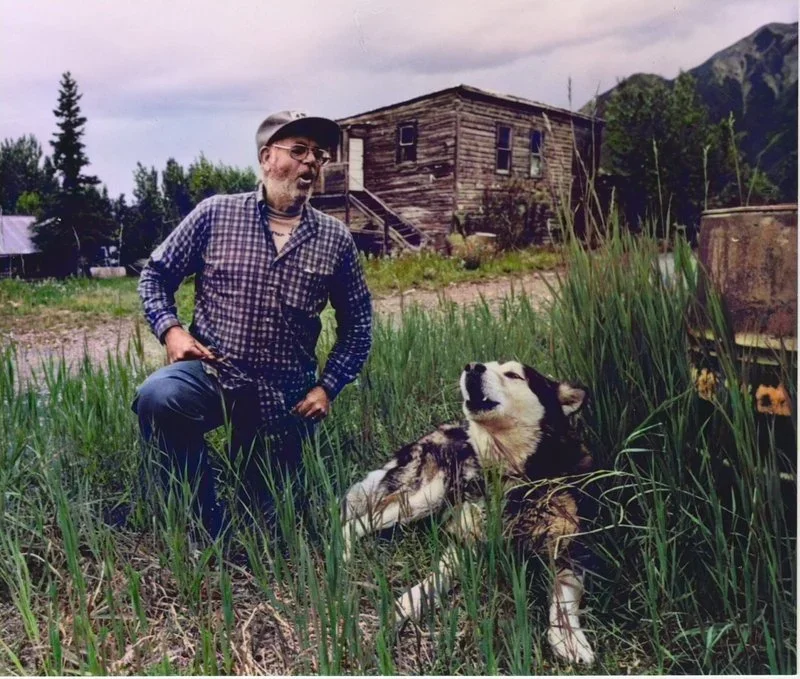
Ken Norris howling with “Hawkins" in downtown McCarthy during a Field Studies program in the early ‘80s
History
The Wrangell Mountains have been a field classroom for students since the early 1970s, when the newly founded UC Santa Cruz Environmental Studies program first brought undergraduates to McCarthy to study attributes and values of Alaska’s wildlands. Under faculty leadership of Professors Richard Cooley and Ken Norris, coordinated by Ben Shaine, students carried out pioneering explorations in the Wrangells in 1971 and 1972. Their work culminated in published reports situating the Wrangell Mountains in the national conversation of options for protection of wild places that were enacted by Congress with designation of Wrangell-St. Elias National Park and Preserve in 1980. This lineage connects Wrangell Mountains Field Studies to the innovative, field-based educational traditions of American environmental studies, and to literary and philosophical thought in which learning is inseparable from direct engagement with nature.
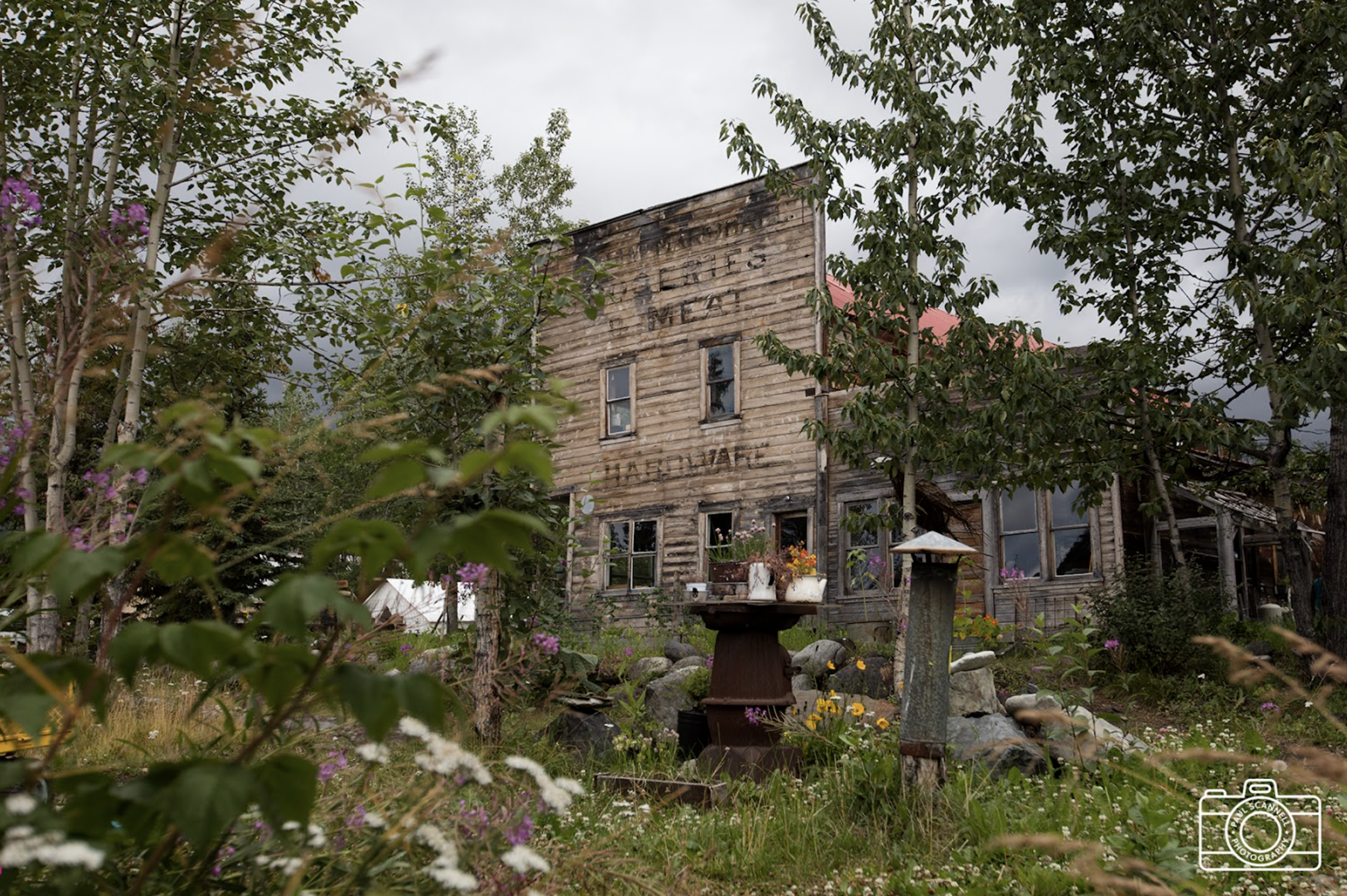
Building on those beginnings, in 1983 Shaine and colleagues collaborated in creating the credit-granting summer program for undergraduates in the Wrangells that continues to the present. Hosted first at what is now Porphyry Place cabin and then at McCarthy’s historic hardware store, Field Studies became a cornerstone of the Wrangell Mountains Center. Since its founding, the program has been accredited through several universities and is now affiliated with the University of Maine. Alumni have carried the program’s influence into graduate work, professional careers, and personal lives, some returning to McCarthy as residents and many describing their Wrangells summer as transformative.
-
Creating an inclusive, interdependent, and collaborative community between students, instructors, and our partners is a core value of our program. Our program and our research are made stronger and more meaningful when all participants are able to bring their whole selves to the community we co-create over the course of our time together in the Wrangells.
We value differences in background, culture, experience, place of origin, religion, sexual orientation, gender identity and expression, race, ethnicity, age, ability, and more. Field research programs can and should do more to confront the unjust barriers to access and inclusion that have existed throughout the history of scientific research, with special attention given to the local context of each program. We are committed to actively welcoming people from historically marginalized and/or underrepresented communities, including but not limited to Alaska Natives, people of color, people with disabilities, people who are LGBTQIA+, women and gender minorities, and people at the intersections of these identities and others. We strive to facilitate a diverse, equitable, and inclusive culture within the program, such that everyone involved experiences a deep sense of belonging and of being a valued and supported member of the Field Studies community.
-
We aim to cultivate an inclusive learning community intensively engaged in connecting with, and studying, the landscapes around the Wrangell Mountains. Our program has an emphasis on research process and context, interdisciplinary methodologies, and community research and education interests. We teach and learn experientially as much as we can, through site-based studies and discussion, faculty-led exercises, and student field projects. Our immersive setting allows for focused attention to our surroundings; the art of noticing is a sustained practice, supported by reading, writing, arts, reflection, dialogue, and spending time on the land. Our broader community is one where people depend on each other and work together as a way of life – we strive to give back to the community that supports us and to be mindful of how we relate to the land and to each other. We are always “off the grid” here and we spend extended periods of time in the backcountry. We believe there is ample opportunity for personal growth through the shared experience of building trust, collaboration, and mutual support in technical scenarios, scholarship, and in community living.
The Wrangell Mountains Center
The Wrangell Mountains Center is a non-profit research, humanities and education institute located in McCarthy in Wrangell-St. Elias National Park & Preserve. The Center hosts programs promoting understanding, appreciation, and stewardship of the land and its communities. We create opportunities for personal transformation through direct experience with this extraordinary place, increasing understanding of complex natural processes, changing views of the human role in the natural environment, and developing skills for taking effective action. In the process of helping people come to know the Wrangell Mountains, we build local, national, and international constituencies for the understanding and protection of wildlands and the enhancement of mountain cultures in Alaska and beyond.
WMC has hosted field studies for over four decades. The 2026 program continues this tradition.